
Kaysville City Directory Collections
The strongest Kaysville city directory evidence is a set of named catalogs and museum source notes, not a single complete run. The table separates a verified Kaysville-covering telephone book from broader Davis-area or Salt Lake suburban titles. That keeps a neighboring-community volume from being mislabeled as Kaysville-only.
| Collection | Years | Where Held | Access |
|---|---|---|---|
| Mountain States Telephone and Telegraph, Salt Lake City and adjoining towns | 1931–1932 | FamilySearch Catalog item 1402678 | Catalog metadata; image access may require account or center |
| Fall telephone book, KFH source list | 1953 | Kaysville–Fruit Heights Museum | Ask through the museum collection |
| Telephone Directory and Yellow Pages | 1960 | Kaysville–Fruit Heights Museum | Source-list lead; public scan not located |
| R.L. Polk Utah directories | Exact complete run not located | University of Utah Marriott collection and library catalogs | Verify place coverage for each object |
| Salt Lake City Suburban Directory | 1977–1978 | Marriott Digital Library | Object metadata; Bountiful and Woods Cross named, Kaysville not confirmed |
There is no verified Kaysville-only Polk run in the inspected official material. The safest catalog terms are Kaysville, Davis County, Polk, telephone directory, reverse directory, and adjoining towns.
Kaysville Library and Museum Access
Davis County Library’s Kaysville Branch is at 215 North Fairfield Road, Kaysville, with weekday and Saturday hours listed by the system. The branch began as Kaysville City Library in 1921, joined the county system in 2005 or July 2006, and moved into its present building in August 2015. Those dates help explain why older shelf records may be split between city and county catalogs.
Farmington Headquarters, at 133 South Main Street, has the system’s microfilm reader, public computers, scanning and printing, interlibrary loan, and a Locked Case collection of Davis County and Utah-interest items. The library locations page is the fallback when the Kaysville catalog does not expose a scan. The digital library documents Davis County Clipper back issues from 1892 through 1992.
The Kaysville–Fruit Heights Museum at 23 East Center Street is the distinctive local archive. Its KINDEX tool searches Persons, Places, Dates, Events, and Subjects. At inspection, 6 of 126 oral-history audio items were transcribed and searchable, so an intriguing name or place result should be treated as a lead and checked against a dated record.
Reading a Kaysville City Directory Entry
A Kaysville city directory entry must be read in the context of its own volume. The inspected 1931–1932 item is confirmed as a telephone directory, but a complete page image was not text-accessible during research. Do not assume that a mark from a later Polk volume has the same meaning in an earlier telephone book.
| Name | Surname and given name or initial; spouse or household notation may follow |
|---|---|
| Occupation | Use only when the volume prints an occupation or business connection |
| Address | House number and street, postal label, exchange, or number as printed |
| Owner or residence mark | Record the symbol only after checking that volume’s key |
| Cross-reference | Look for business, spouse, surname, or address entries that point elsewhere |
- Criss-cross section
- A street-order or address-order part of some directories, useful for moving from a place to a name.
- Householder index
- A name or household listing that helps locate a residence entry, though coverage depends on the volume.
- Abbreviation key
- The volume’s own guide to marks such as residence or household notation; photograph it before transcribing.
- Snapshot
- A dated publication view, not proof of a current resident or a complete household.
Check Polk Metadata First
The University of Utah Marriott Library’s Utah City Directories Collection exposes publisher, title, date, place coverage, description, and PDF or reference links for its digital objects. R.L. Polk appears as a publisher in the collection. Those fields are valuable because a title that sounds local may cover only selected Davis communities.
The 1977–1978 Salt Lake City Suburban Directory includes Bountiful and Woods Cross in the displayed description. Kaysville is not confirmed for that object. A catalog record must say Kaysville before a Kaysville city directory claim is made. FamilySearch, WorldCat, Marriott, and the Davis County Library are the right places to test the title, place, year, and publisher together.
Kaysville Telephone Era Checkpoints
Kaysville’s local record story has several useful checkpoints. The museum history identifies John R. Barnes as the first Kaysville resident with a telephone. The verified 1931–1932 catalog places Kaysville among adjoining towns. Museum tour sources then name a fall 1953 telephone book and a 1960 telephone directory and Yellow Pages. These are evidence points, not proof that every household had a listing.
| Period | Record clue | What it can do |
|---|---|---|
| 1880s | Telephone history and early civic records | Place communications in local context |
| 1931–1932 | Mountain States catalog explicitly naming Kaysville | Search a verified Kaysville-covering telephone source |
| 1953 | KFH fall telephone-book source note | Ask the museum for a local checkpoint |
| 1960 | KFH Telephone Directory and Yellow Pages source note | Test address continuity and business names |
| 1977–1978 | Marriott suburban object | Use only for communities named in metadata |
Newspapers Fill Directory Gaps
The Davis County Clipper digital run, 1892–1992, can supply the event that a directory cannot. Search around a move, marriage, death, business opening, civic role, or house name. KFH Museum also cites the Weekly Reflex, Davis Reflex-Journal, and Lakeside Review in historic-house research. The Weekly Reflex began in Kaysville in 1911, with William P. Epperson and Clyde Epperson associated with the paper from 1912.
Newspaper language should be kept as printed, then checked against another source. An obituary may name a spouse, parent, residence, funeral home, cemetery, or heir. A business notice may place a person at a work address rather than a home. The difference matters when a city directory entry is used for family history.
The 1894 Kaysville Map Clue
KFH Museum’s Center Street tour cites an 1894 Kaysville Fireman’s Insurance Map accessed through the Library of Congress. The Sanborn source shows building footprints, lot or block context, and use. It does not name occupants. Overlaying its structure clue with the current parcel, plat, and street map can explain an old address before the telephone era.
The map is especially useful for a historic house question. A changed footprint can flag an addition, demolition, or lot split. It cannot by itself prove that a named family lived there. Pair the structure with deeds, Clipper notices, cemetery records, and any directory page that uses the same street and number.
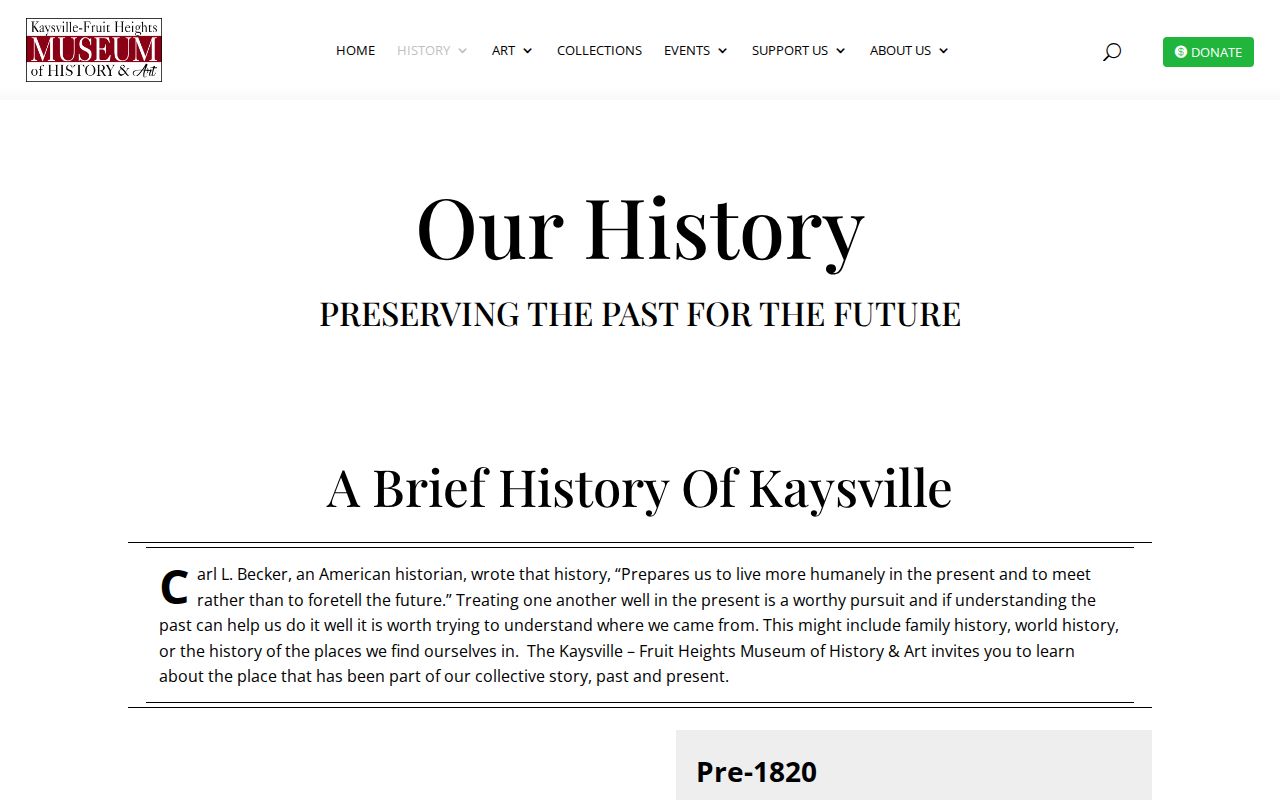
The museum’s local-history material gives the strongest context for interpreting a Kaysville city directory beside a named house or downtown block.
Using Kaysville City Directories for Family History
Family history works best when each directory year becomes one line in an evidence timeline. Use the address, name, spouse notation, exchange, and any stated residence mark exactly as printed. A person may disappear because of a move, death, an unlisted number, a publication gap, or a locality label that changed.
- Find the first appearance and save the title, year, locality, page, and original spelling.
- Follow the name forward, noting street changes, initials, spouse references, and business or residence labels.
- Check any reverse or criss-cross section for the same street and adjacent entries.
- Pair directory dates with federal census years, including the 1850/1851 territorial context and public federal schedules through 1940.
- Close a death or move question with the Davis County Clipper, Kaysville Cemetery, Utah Archives, or a permitted vital-record request.
The Kaysville resident lookup route helps when a historic directory result needs a modern record check. A directory remains a dated clue, even when the name and address look exact.
Kaysville Digital Directory Leads
The Davis County digital library is the documented online route for the Clipper, while FamilySearch supplies catalog records and possible image access for the 1931–1932 telephone directory. The University of Utah collection adds metadata and digital objects for broader Utah directories.

Digital availability can be limited by contract, login, or image rights. Record the catalog citation before assuming that a search-result title has a readable page scan.
Kaysville Museum Directory Context
KFH Museum tour pages name the 1953 and 1960 telephone sources and connect them to local house research. The museum’s archive can be searched by person, place, date, event, or subject, with transcription status varying by item.
The KFH Museum history page is the source for the local archive and house-tour context.
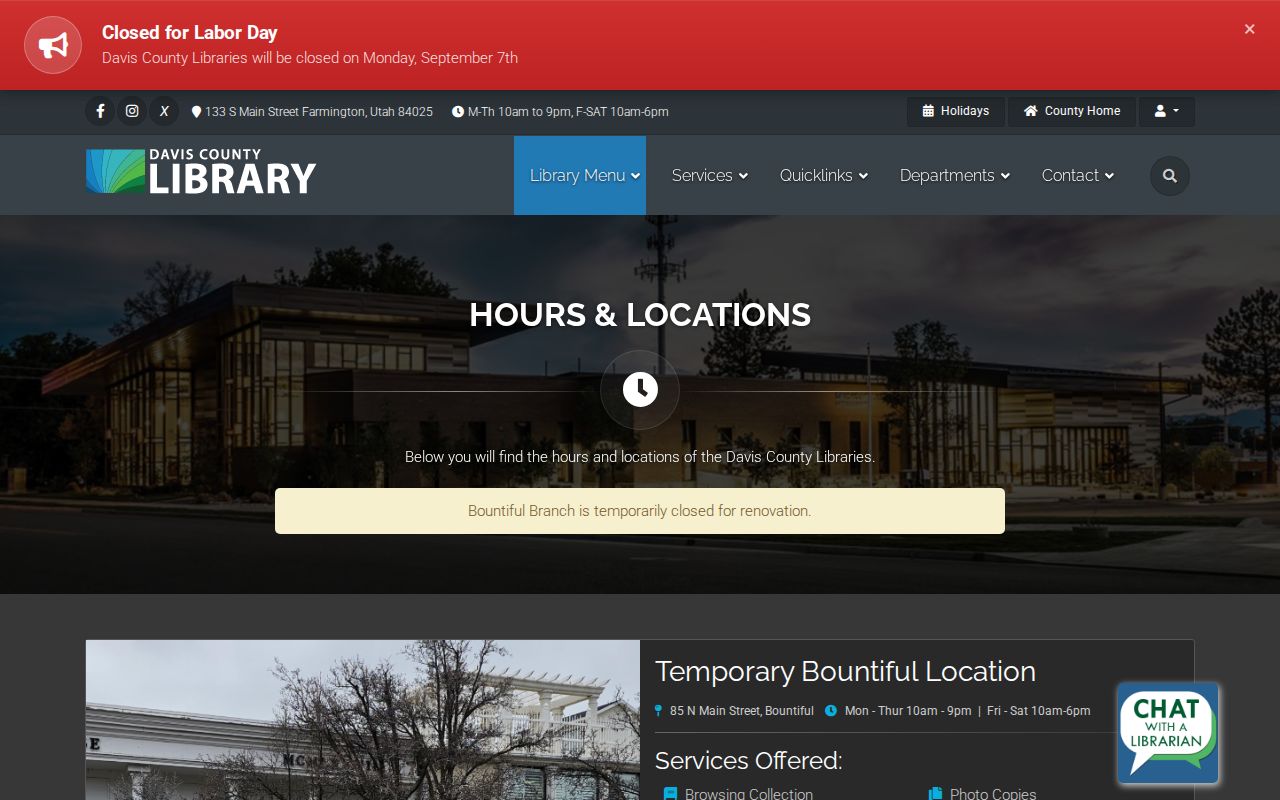
Use a museum lead to locate a dated source, then corroborate a household claim with a record held by the library, Archives, Recorder, court, cemetery, or another named custodian.
Kaysville Catalog Verification
FamilySearch and Marriott catalog records are useful because they show title, place, year, publisher, and image-access notes before a researcher relies on a directory hit.
The KFH Center Street tour page is the source for this local directory and house-history lead.
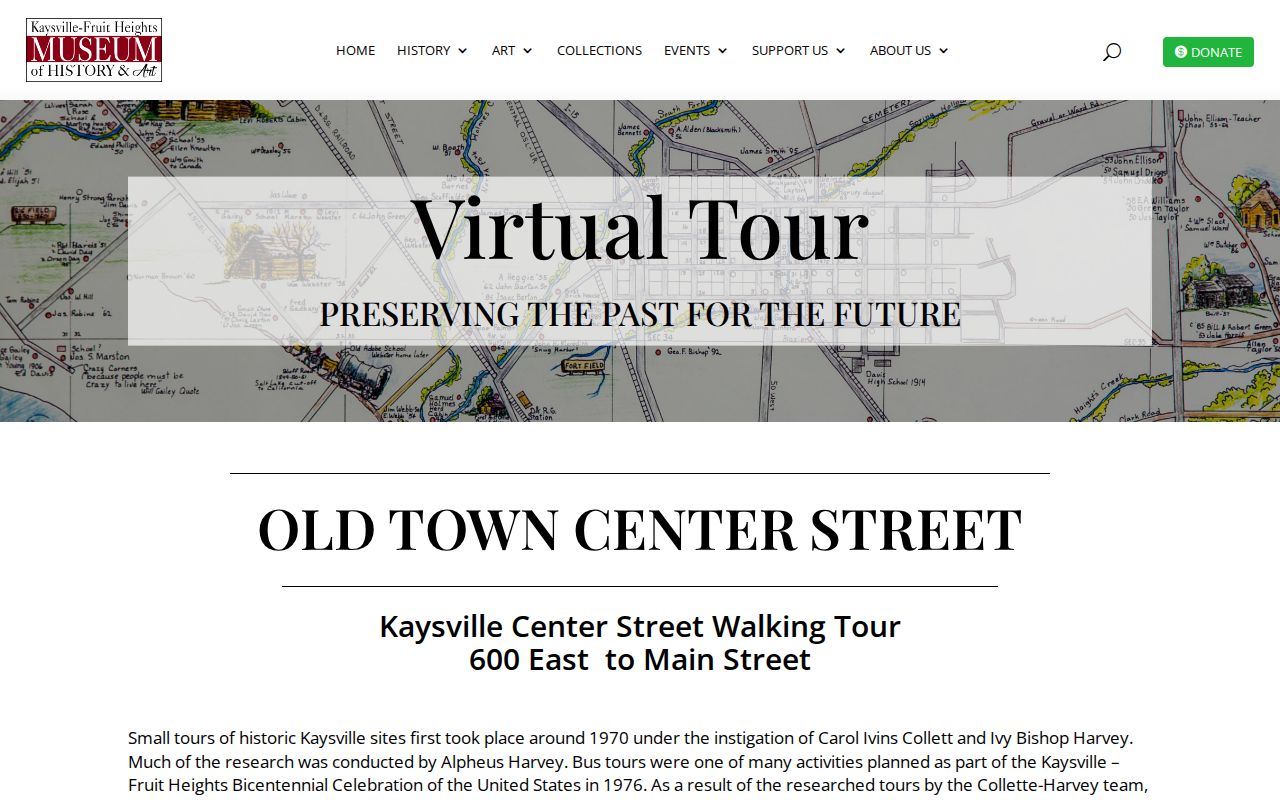
A catalog image supports source checking. It does not prove that a broader title includes every Kaysville address.
Limits of a Kaysville City Directory
No complete Kaysville-only directory run was located. The 1931–1932 book is a verified Kaysville-covering telephone directory, while the 1953 and 1960 books are museum source leads. Telephone books can omit unlisted numbers and non-subscribers. Reverse sections may be absent. Occupation or business entries can point to a business location, not a home.
Preserve the volume’s title and key, use the original place label, and never stretch a Bountiful or Woods Cross result into a Kaysville conclusion. When a directory stops, the library microfilm reader, Locked Case collection, museum inquiry, FamilySearch catalog, Utah Archives, newspapers, and parcel records provide the next lawful route.